
Embodied Improv: Thinking With Your Hands
This week is all about the power of gestures!

This is week two of our exploration of Annie Murphy Paul’s Extended Mind and the science of letting your body do the thinking. Last week, we explored the power of gut feelings. This week: HANDS! We’re going into the science of…
Ever notice how babies use hand signs before they learn to speak? They reach, wave or clench their fists to say “FEED ME.” For most of us, gesturing is our first language and as adults, it continues to support our thinking (and improvising) in three ways:
The Enactment Effect: Gestures Help Us Learn by Doing
Remember when learning styles were all the rage? I do. I actually took a Learning and Development training a couple few ago where they were the focus of a whole chapter. So imagine my surprise when I learned THEY ARE A MYTH. There is actually very little evidence that some people learn better from power points than podcasts.
You know how people DO consistently learn best? By doing the dang thing!
This is the Enactment Effect. When you pair a thought with a physical action, even something as small as a gesture, you create a dual-coded memory trace (better memory storage). You aren’t just storing information in your brain, you’re also storing it in your body.
Researchers have found that students who gestured while learning retained the concepts for much longer than those who sat still. So…move!
RE: Improv
In a class or a practice group, you or a teammate might ask questions like:
How does the pattern game work again?
Would this justification have been better?
Could I do a walk-on and clone the unusual thing?
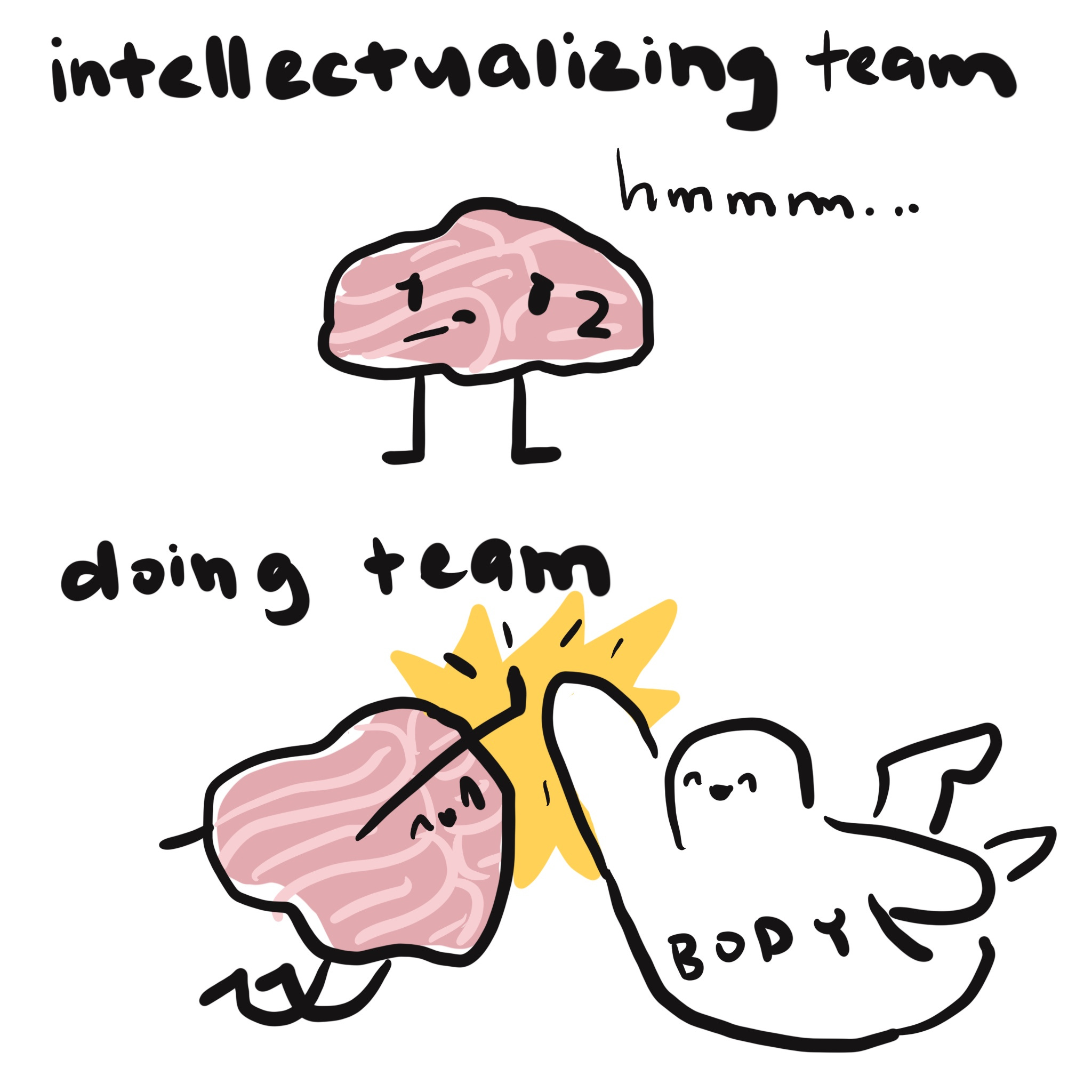
Improv is like riding a bike. I could talk your ear off about how to ride a bike, but it’s not going to make sense until you actually ride it. You can intellectualize improv forever, but you won’t truly get it unless you give your body the opportunity to join in on the learning. In the words of Nike’s iconic 1988 marketing campaign, “Just Do It.”
Shout-out to Jake Jabbour’s We Improv, which is built on this idea. Jabbour prioritizes reps over lectures and heavy note-giving - a prime example of pushing students to get their hands scenically dirty!
Cognitive Offloading: Gestures Free Up Mental Space
Working memory has its limits, especially in improv where you’re tracking premises, callbacks and your partner’s made-up name (is it Schmerald?). Things will drop.
Gestures can help! By giving an idea a physical place to live, they help relieve the pressure on your brain to do everything.
RE: Improv
The Group Mind Palace: When you use object work to pick up an imaginary coffee mug or type on a computer, you’re creating a shared spatial map with your scene partner that links objects, characters and relationships to a physical space. The more of the space you flesh out, the easier it is to find moves and inspiration in the imaginary space you’ve built.
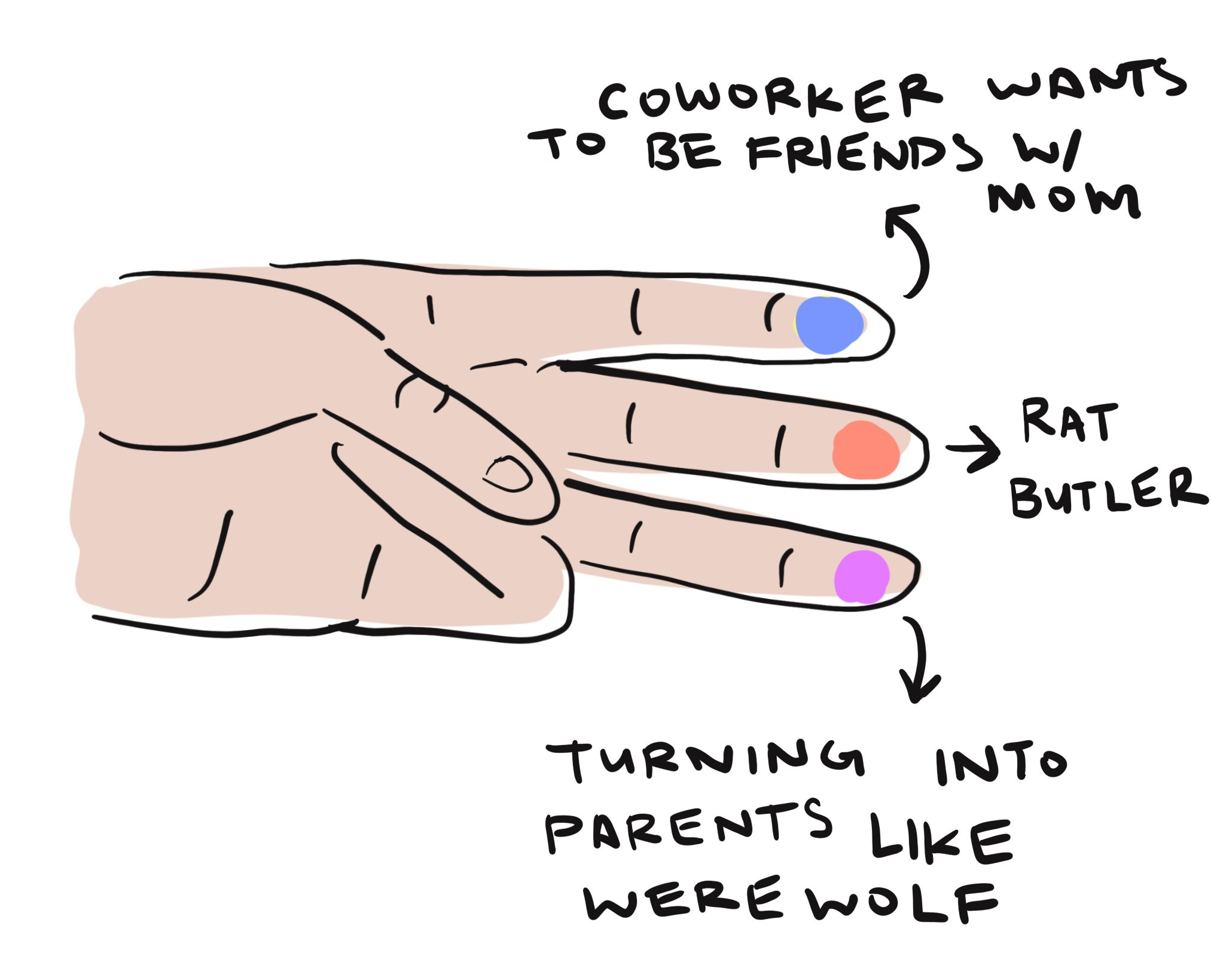
Remembering Premises: An old trick for holding onto ideas from the opening is counting them on your fingers as you listen. The physical “anchor” of your pinky or pointer finger holds the idea so your brain can go back to paying attention.
Gestures Help Communicate Abstract Ideas
Researchers found that when scientists are grappling with complex ideas, their gestures often PRECEDED their words. Their bodies understood the idea before their conscious mind could articulate it. In these scenarios, gestures served as a bridge to put complicated concepts into words.
RE: Improv
Finding What’s Next: If you’re stuck in a scene and don’t know what to say, move! Interact with the environment. Hit the object-work classics like stacking cans, chopping onions or moving crates around. Physical actions can jumpstart your thinking, leading you to the next line or game move.
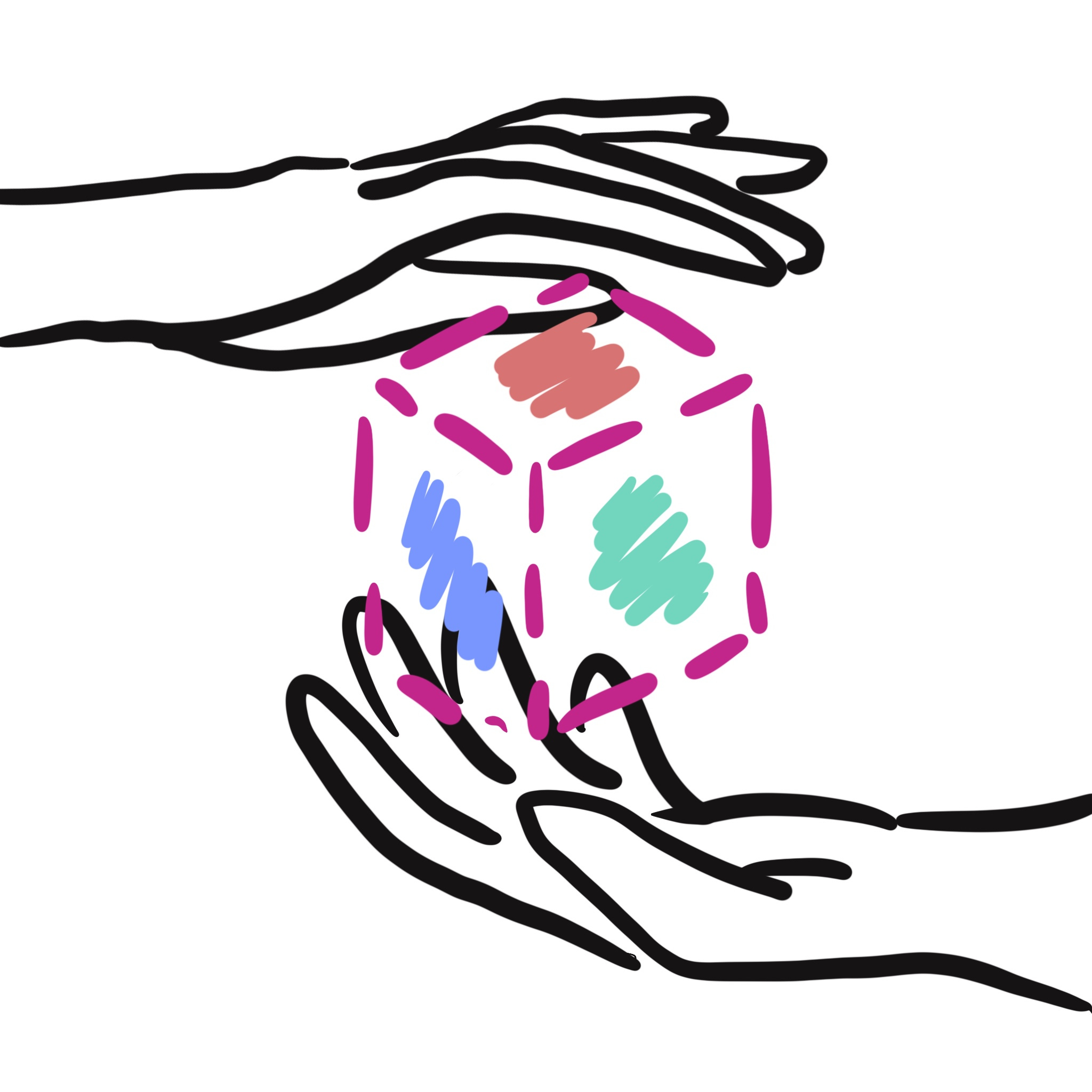
Squishy Concepts: Gestures also help us communicate abstract ideas by letting people literally “see” what you mean. In my own coaching, I often find myself miming turning a cube around in my hands to communicate hitting a joke from multiple angles. I think it helps!
THE AUDIENCE POV
Gestures not only help us think, they also shape the audience’s perception of us. Body language expert Carol Goman, PhD, found that people who use more gestures are perceived as warm, agreeable and charismatic while people who stayed still were read as more cold and logical. Do with this what you will in your everyday life, but as far as improv goes, this could be a fun way to approach character work!
Experiment with using more vs less gestures. A distant CEO probably gestures less than a fun Chardonnay-all-day Midwest mom. Try it out and report back!
TL;DR
MAKE THOSE HANDS WORK!
Gestures help you think, remember and communicate more clearly. They help us create richer comedy landscapes with our scene partners AND make the audience fall in love with us. So get in there and use your hands!
I’m curious to hear what you think! What are other way we can use gesture in improv? Leading with a body part comes to mind…any other ideas?
This has me thinking about how speakers of different languages use different gestures. Stereotypically it seems the farther you go away from the equator the less obvious the gestures are. But I do wonder about if the gestures are still there, just more toned down and subtle? Have you noticed a difference in say, Dutch or British improvisers from those in LA?